




Table of Contents
- What Is a Baraat Ceremony?
- Cultural Significance of the Baraat Ceremony
- Traditional Baraat Ceremony Rituals (Step-by-Step Guide)
- Modern Baraat Ideas for Today’s Weddings
- How to Plan a Baraat Ceremony
- Types of Baraats in India
- Final Thoughts: Celebrate Your Baraat with Heart
- FAQs
There’s a special kind of magic in an Indian wedding, but nothing matches the excitement of the baraat ceremony. It’s the moment everyone waits for the dhol to start beating, the groom’s friends and family gather, and the energy suddenly shifts into full celebration mode. Whether you’ve danced in a baraat Indian wedding before or you’re experiencing it for the first time, this lively procession is where the joy truly begins.
It’s loud, it’s colorful, it’s emotional and it sets the tone for the entire wedding day.
What Is a Baraat Ceremony?
The baraat meaning refers to the groom’s celebratory procession to the wedding venue, a vibrant parade of music, dance, and family. Rooted in Hindu and Sikh traditions, this joyful journey symbolizes the groom’s arrival at his bride’s side and marks the beginning of the union of two families.
Cultural Significance of the Baraat Ceremony
-
Symbol of Joy & Unity: The Indian baraat reflects happiness, community support, and the collective journey of two families coming together.
-
Royal Origins: Historically, grooms would ride majestic animals, horses, elephants, or even chariots as a symbol of valor and status.
-
Ritual Welcome: When the baraat arrival reaches the venue, the bride’s family often greets them with garlands, aarti, and tilak signifying acceptance and blessings.
-
Cultural Variations: From Bengali “Borjatri” to Rajasthani camel baraats, regional customs bring unique flair to the tradition.
Did you know? In some communities, the groom historically traveled for days to reach his bride’s home, making the wedding barat not just a celebration but a journey of commitment.
Traditional Baraat Ceremony Rituals (Step-by-Step Guide)
Groom’s Attire & Accessories
-
The groom Hindu typically wears a sherwani (long coat) or a traditional kurta, paired with a safa (turban) and sometimes a sehra, a veil of beads or flowers hanging in front of his face.
-
In some traditions, especially among Rajputs, the groom also carries a sword, symbolizing honor and protection.
The Procession – Band, Horse & Dance
-
The baraati (groom’s side) follow with exuberant dancing, often to dhol beats, live brass bands, or even a DJ.
-
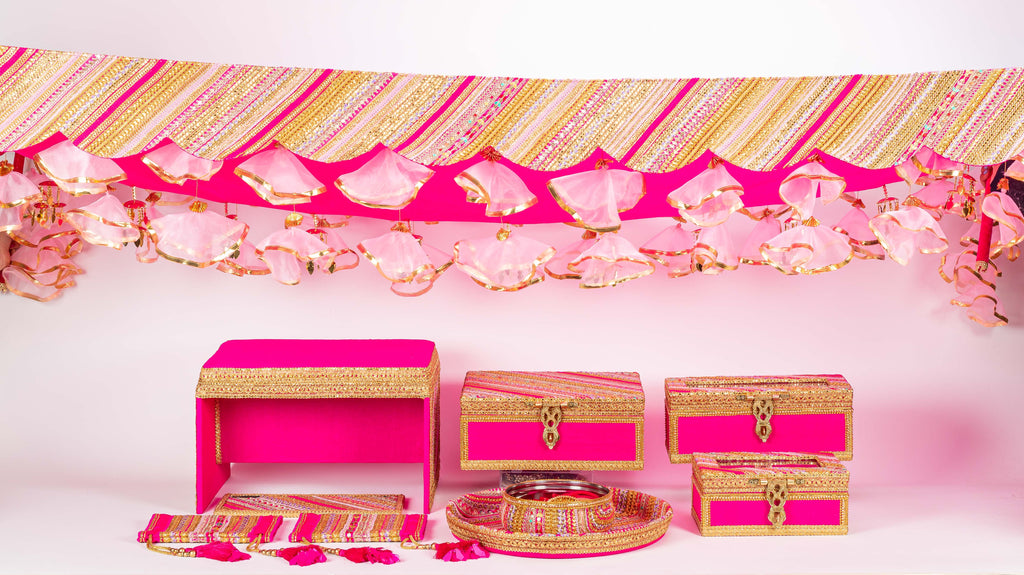
The groom traditionally rides a decorated wedding ghodi, a wedding horse but modern weddings may use vintage cars, motorcycles, or even elephants depending on the couple’s style. You’ll often hear the phrase dulha on ghodi as a symbol of this moment. Many couples also enhance this entry with a beautifully crafted wedding umbrella, adding a royal and elegant touch to the procession.
-
As the procession moves, participants may dance, sing, or shout blessings, making the baraat procession a visually and emotionally powerful moment.
For traditional detailing, families often include accessories like the Surmadani or decorative bowls such as the Pataaree Thaal with Tikaa Bowl for pre-procession rituals.


Welcoming the Groom – Milni & Rituals
-
Milni Ceremony: A formal greeting where counterparts from both families (like fathers, uncles, aunts) meet, exchange garlands and symbolize the merging of families.
-
After milni, the bride’s side often performs aarti (ceremonial light), applies tilak (sacred mark), and sometimes even washes the groom’s feet as a sign of respect and blessing.
To create a visually rich and traditional welcome, many families use Pataaree Welcome Ribbon Thaal Set for aarti and Shagun Envelope for gifting and blessings
Etiquette Tips:
- Coordinate with both families beforehand on milni order and guest logistics.
- Decide in advance if all baraatis will meet family individually or in groups.
- Maintain a balance of spontaneity (dance, cheer) with decorum.
Modern Baraat Ideas for Today’s Weddings
The baraat tradition is evolving beautifully, especially in the 2020s.
-
Destination Baraats: Couples are increasingly choosing exotic venues, beach weddings in Goa, palaces in Udaipur, or abroad.
-
Vehicle Innovation: Instead of horses, grooms now arrive in classic Rolls-Royces, vintage cars, or even themed vehicles like motorcycles or chariots.
-
Eco & Animal-Free Options: For animal welfare or eco-conscious couples, floral-decorated cars, bicycles, or electric vehicles are great alternatives.
-
Flash Mobs & Choreography: Many baraats now have choreographed dance sequences, DJ-on-wheels, or a mix of traditional and modern music.
-
Inclusive Baraats: There’s a growing trend where brides have their own baraat, or couples do a joint baraat, reflecting more equal partnership.
-
Professional Baraatis: In some NRI or destination weddings, couples even hire professional dancers or “baraati actors” to amplify the energy.
How to Plan a Baraat Ceremony
Here’s a practical guide to planning a baraat that’s both meaningful and manageable.
-
Music & Entertainment Tips
-
Decide between a live band, dhol team, or DJ (or a mix).
-
Curate a playlist: mix traditional dhol or shehnai with Bollywood hits or Bhangra for a modern touch.
-
Hire entertainers early, bands and dhol groups are in high demand.
-
Coordination & Groom’s Party Style
-
Choose matching turbans/safas for the baraatis to create visual harmony.
-
Plan outfits (sherwanis, kurtas) for the groom's side, ensuring they reflect your wedding’s color palette or theme.
-
A small rehearsal can make the reception of barat smooth and organized; this is where the reception of barat meaning truly shines.
-
Logistics & Timeline
Sample Timeline:
-
Groom gathers with the baraatis and completes the sehra bandi (tying of the sehra).
-
The procession departs, with music, dance, and celebration along the way.
-
The baraat reaches the venue, followed by milni and other welcome rituals conducted by the bride’s family.
- The groom then transitions into the wedding ceremony to begin the formal rituals.
Things to plan:
-
Route permissions / traffic control for processions
-
Sound permits if outside
-
Weather contingency (shade, umbrellas)
- Safety (for horses or vehicles)
Checklist:
-
Confirm all vendors (band, dhol, DJ)
-
Arrange transportation (for baraatis + groom)
- Emergency kit (water, first aid, slippers)
For decor or utility needs during baraat coordination, families often use Tray Tissue Basket perfect for organizing essentials elegantly.